


Our Story
Tackussanu Senegal began with an introduction — a friend, C. Biaye, who bridged a world. Through that connection, we found the Wolof women weavers of rural Senegal. And a question worth building something around: how do you honor this craft, and make it sustainable for the people who carry it?
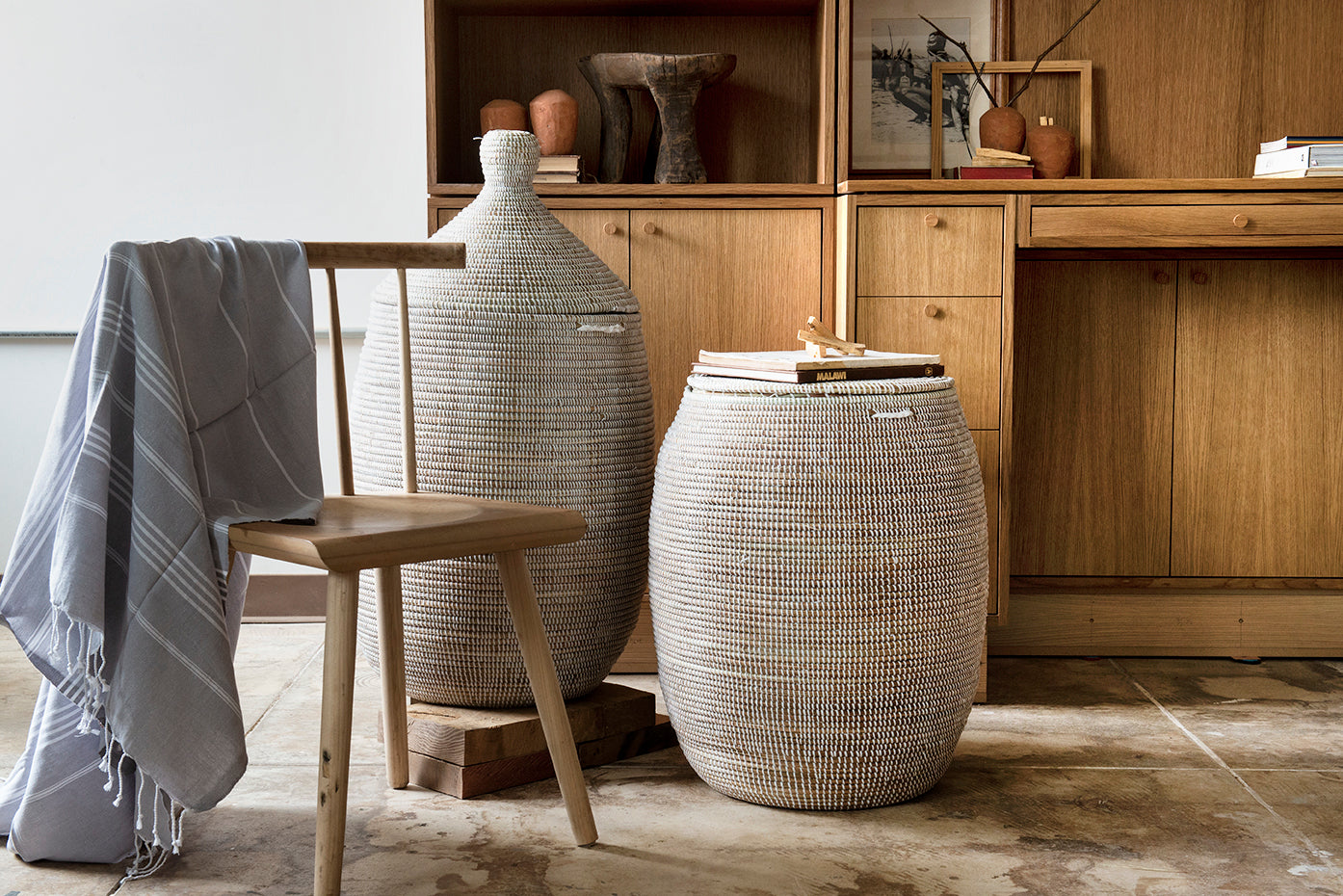
Ngaye village is the center of it. Every Monday, artisan women gather there — sourcing materials, exchanging work, maintaining a tradition that predates most of what we call contemporary design. The coiling method they use is precise and slow: locally grown grass, recycled plastic strips, hands that have practiced this for a lifetime. Each basket is the result of that process. No shortcuts.
Fifty-four percent of these women have had no formal education. That number says nothing about what they know. They are businesswomen and craftspeople, keepers of a visual language that belongs to Senegal. What limits them is access — to markets, to buyers, to fair prices. We work to close that distance.
We work directly with our weavers. No intermediaries. Fair wages, paid directly. Every piece carries their story, even when the market doesn't ask for it.
Established May 2019.
Tackussanu Mission
Jasz spent more than ten years close to Senegalese culture. When that chapter ended, she kept the baskets—the hand-coiled pieces that had drawn questions from everyone who walked through her door. She began looking for answers.
What she found: these baskets were made by Wolof women. Not hobbyists—master craftspeople, carrying centuries of tradition in their hands. And many had no way to reach people who would pay them what their work was worth.She did not want to build a charity. She wanted to build a market.
One where the artisan is recognized as an expert. Where her price is her decision. Where the money reaches her directly. Where her craft and her story remain hers to tell.
That is what Tackussanu Senegal is.
We make pieces that build your conscience. Each object is hand-coiled by Wolof women in Senegal using Vetiveria nigritana—a technique with centuries behind it. You know who made it. You know how long it took. You know why it matters.
We don't ask you to feel charitable. We ask you to recognize excellence. To respect the maker as an expert. To understand that by collecting a piece, you're part of keeping this tradition alive—not as history, but as living craft.
Beautifully Empowered. Sophistication Made by Hand.

About Our Founder
Jasz Diop is the founder of Tackussanu Senegal. Her work sits at the intersection of cultural preservation, artisan empowerment, and sustainable design — built on the belief that how something is made is as important as what it becomes.
________________________________________
In her own words
I spent over ten years deeply connected to Senegalese culture — through marriage, through daily life, through the objects that filled our home. When that chapter ended, I had these pieces. Baskets, textiles. Things people always noticed and always asked about. I started researching. What I found was that basket weaving in Senegal is almost entirely done by women. And I learned what many of those women face — I wanted to create something real. Not charity. A direct partnership — where they set the price, where the money reaches them without passing through anyone else's hands, where their craft and their story belong to them.
That is Tackussanu. That is why it exists.Sustainability for the Artisan.